
 Don't Panic When Sick!
Korean Pharmacy Survival Guide
Don't Panic When Sick!
Korean Pharmacy Survival Guide
In Korea, hospitals and pharmacies operate separately.
From how to use prescriptions to reading dosage instructions and recommended medicines!
Make sure to remember this guide just in case you get sick. 1. Understanding the Korean Pharmacy System
Korea has a system of Separation of Prescribing and Dispensing.
"Diagnosis from a Doctor,
Medicine from a Pharmacist"
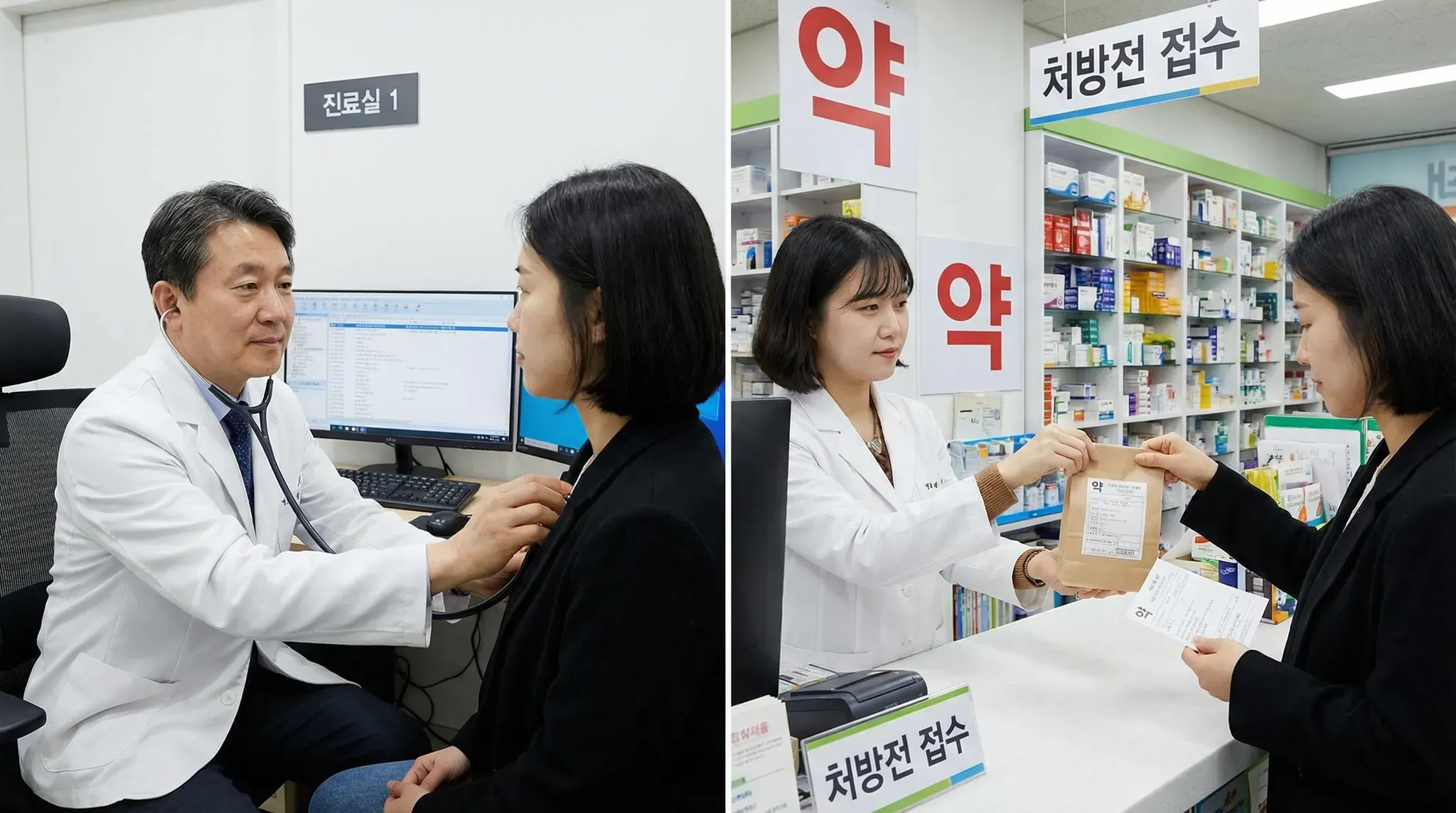
Image: Nanobanana (AI Generated)
Steps to Get Medicine1.
Hospital Visit
•
Get a diagnosis from a doctor.
2.
Receive Prescription
•
After paying for the consultation,
receive a paper 'Prescription'.
3.
Visit a Pharmacy
•
Go to a pharmacy near the hospital.
(Usually located on the 1st floor!)
4.
Receive Medicine
•
Hand the prescription to the pharmacist and get your medicine made.
Wait! Prescriptions have an
'Expiration Date'!
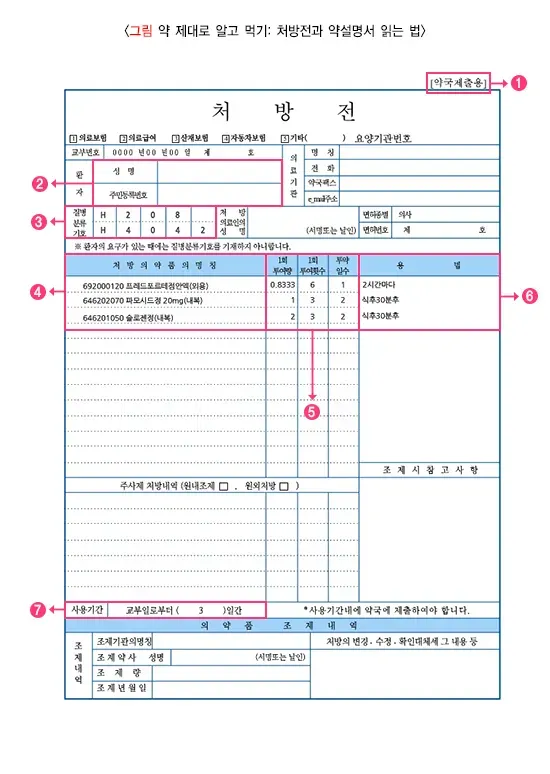
Image: KDCA National Health Information Portal
Prescriptions must be submitted to
a pharmacy usually within 3 to 7 days
(14 days for university hospitals)
from the date of issuance.
Go to a pharmacy immediately
after leaving the hospital!
Pharmacy Operating Hours•
Weekdays :
Usually 9 AM ~ 6 PM
(Similar to hospital closing hours).
•
Weekends/Holidays :
Most are closed, or open only
until Saturday afternoon.
Sick Late at Night or on Holidays?Don't worry!
If you can't find an open pharmacy,
use these 2 methods.
1.
•
Click to search for pharmacies currently open near you.
2.
24h Convenience Store Meds :
•
You can buy basic medicines
for mild symptoms like colds or indigestion at convenience stores.
2. OTC vs. Prescription Drugs
(What's the difference?)
You cannot buy antibiotics
or strong painkillers
without a doctor's prescription.
Category | OTC (Over-the-Counter) | ETC (Prescription Drugs) |
Where to buy | Pharmacy
(No prescription needed) | Pharmacy (Prescription required) |
Types | Mild cold meds, digestion, painkillers, ointments, patches | Antibiotics, blood pressure meds, diabetes meds, hormones |
How to buy | Say the drug name or symptoms | Hand over the prescription |
Wait! Is the pain too severe?
Pharmacies are
for "mild symptoms."
If you have a high fever or unbearable pain,
do not wait—go to a hospital immediately.
For details on how to use hospitals,
check out the
[ Hospital Survival Guide]!
Hospital Survival Guide]! 3. Lost for Words at the Pharmacy?
It's okay if you don't know the name of the medicine
Describing your 'Symptoms' is the most accurate way.
•
Essential Korean Phrases for Symptoms
4. Decoding the Medicine Envelope
Korean medicine envelopes
have very detailed dosage instructions.
Just check these 3 things!
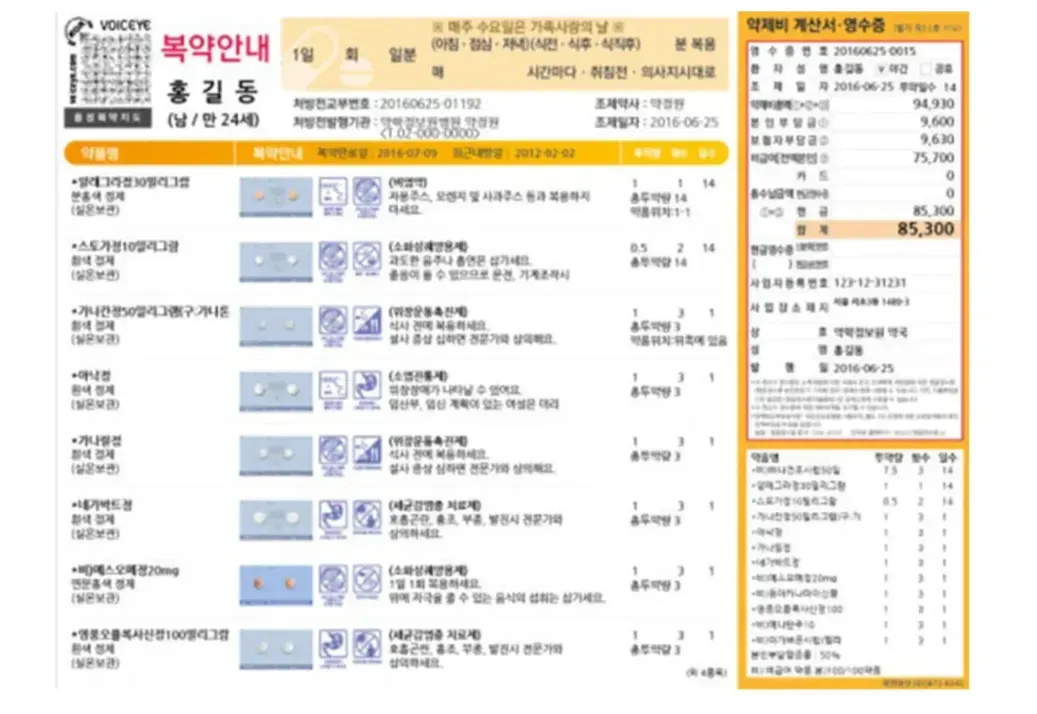
Image: Government Innovation Website
1.
Frequency
•
How many times a day
(e.g., 3 times daily).
2.
Timing
•
When to take it
(e.g., Breakfast / Lunch / Dinner).
◦
After meal (식후 30분) :
Take 30 mins after eating. (Most common!)
◦
Before meal (식전) :
Take 30 mins before eating.
◦
Between meals (식간) :
Take 2 hours after a meal (on an empty stomach).
3.
Dosage
•
Number of pills per serving
Medicine Safety Rules•
When to Stop
You can stop OTC meds when symptoms disappear,
but finish Antibiotics (prescription meds) completely.
•
Side Effects
If you get hives or have trouble breathing after taking meds,
stop immediately and go to a hospital.
•
No Sharing
Do not share prescribed medicines with friends.
5. Must-Have Meds for Students!
Say these names
or show pictures at the pharmacy.
(Selected famous products )
) Note!
It doesn't have to be this exact brand!Just tell them your 'Symptoms',
and the pharmacist will find you a medicine with the 'same ingredients'. Don't worry
Cold & Body Aches
"When you have chills or a fever"
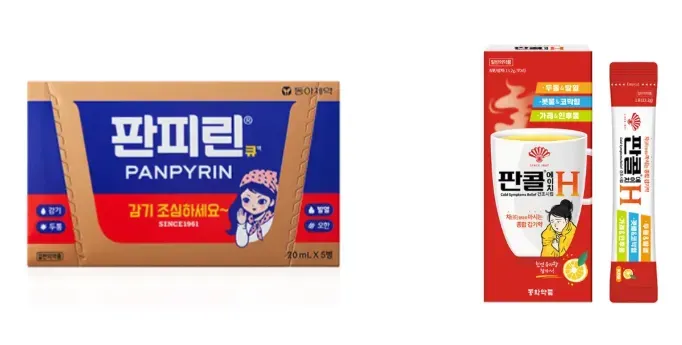
Panpyrin (Image: Dong-A Pharm) / Pancold (Image: Dongwha Pharm)
•
Panpyrin / Pancold:
Drinkable cold medicine.
•
Theraflu:
Tea-style cold medicine.
Painkiller
"For bad headaches or period cramps"
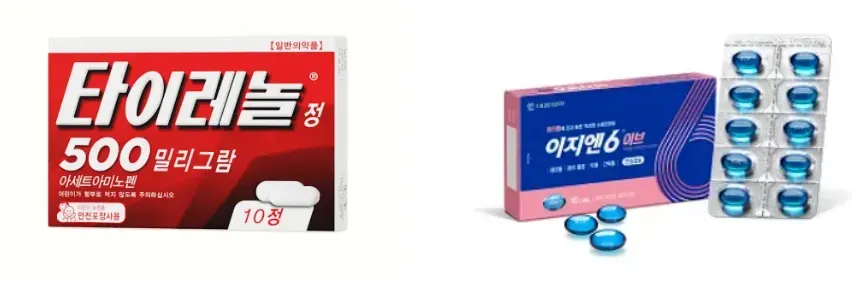
Tylenol (Image: Johnson & Johnson Korea) / E-Z-N 6 (Image: Daewoong Pharmaceutical)
•
Tylenol :
Basic pain reliever/fever reducer.
•
이지엔6 (E-Z-N 6) / 탁센 (Tak-sen) :
Effective for period cramps or toothaches.
Indigestion
"When you feel bloated or have indigestion"
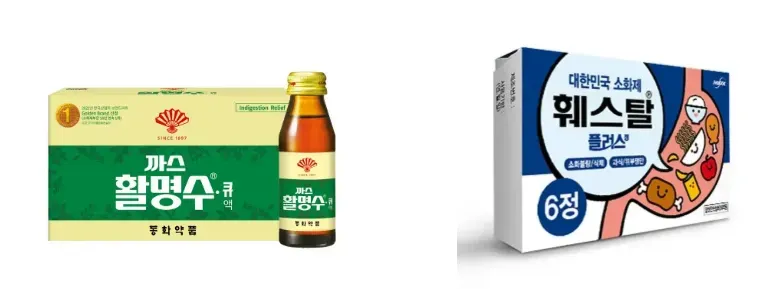
Gas Whal Myung Su (Image: Dongwha Pharm) / Festal (Image: Handok)
•
까스활명수 (Gas Whal Myung Su) :
Drinkable digestive medicine.
•
베아제 (Bearse) / 훼스탈 (Festal) :
Pill type digestive medicine.
Wounds & Scars
"For light cuts or scratches"
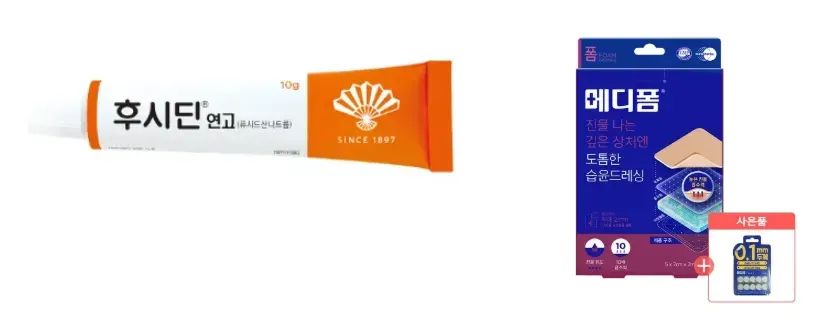
Fucidin (Image: Dongwha Pharm) / Medifoam (Image: Medifoam Official Store)
•
Fucidin:
Prevents infection (Antibiotic ointment).
•
Madecassol:
Skin regeneration ointment.
•
Medifoam:
Hydrocolloid patch (Bandage).
Bug Bites
"For itchy mosquito bites"
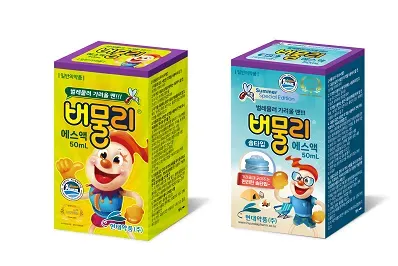
Bumooly-s (Image: Hyundai Pharm)
•
Bumulry / Summercool:
Liquid/Gel type for itch relief.
Final Checklist
Check these in advance for emergencies!
Locate the nearest pharmacy and 24-hour convenience store.
Buy Tylenol (painkillers) and band-aids to keep at home.
Memo your Allergies in Korean.
Did today's 'Pharmacy Survival Guide' help?
Most importantly, stay healthy!
We hope you enjoy a healthy
and strong study abroad life.
HireVisa is cheering for you!